
Selecting for varroa resistance
In addition to looking after our bees to produce honey and beeswax, we are also working to improve the genetics of our locally adapted bees to promote their resistance to pests and diseases.
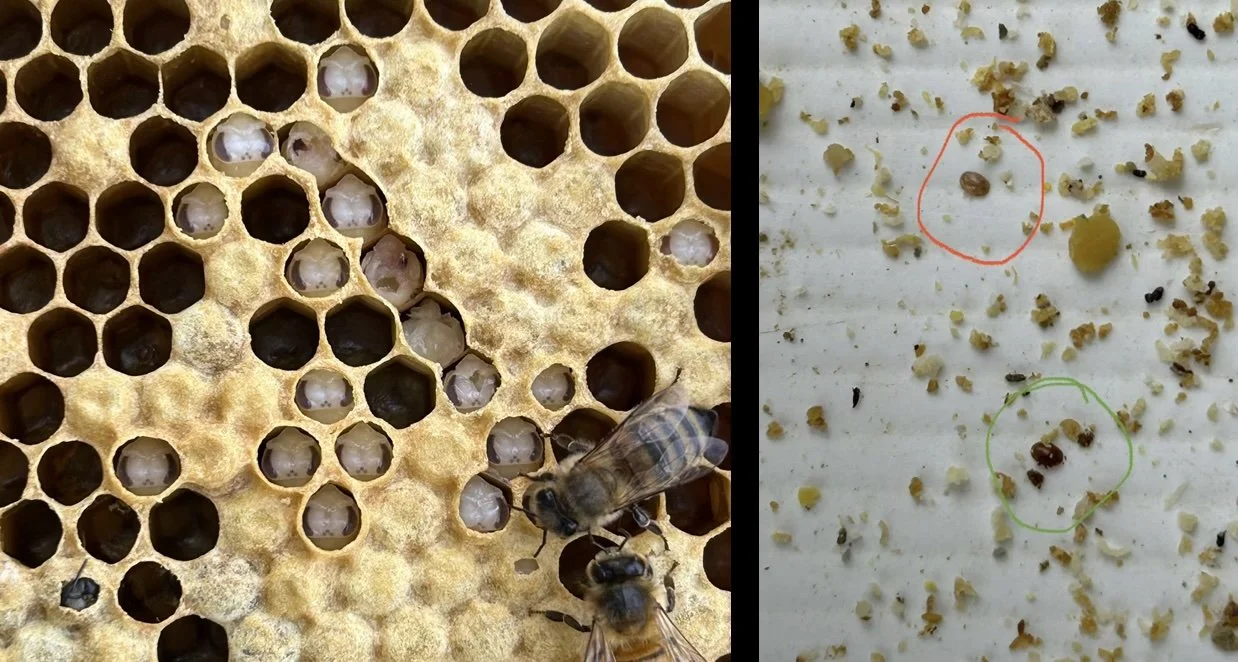
Data is collected and analysed to plot total mite fall and an average daily mite fall per hive.
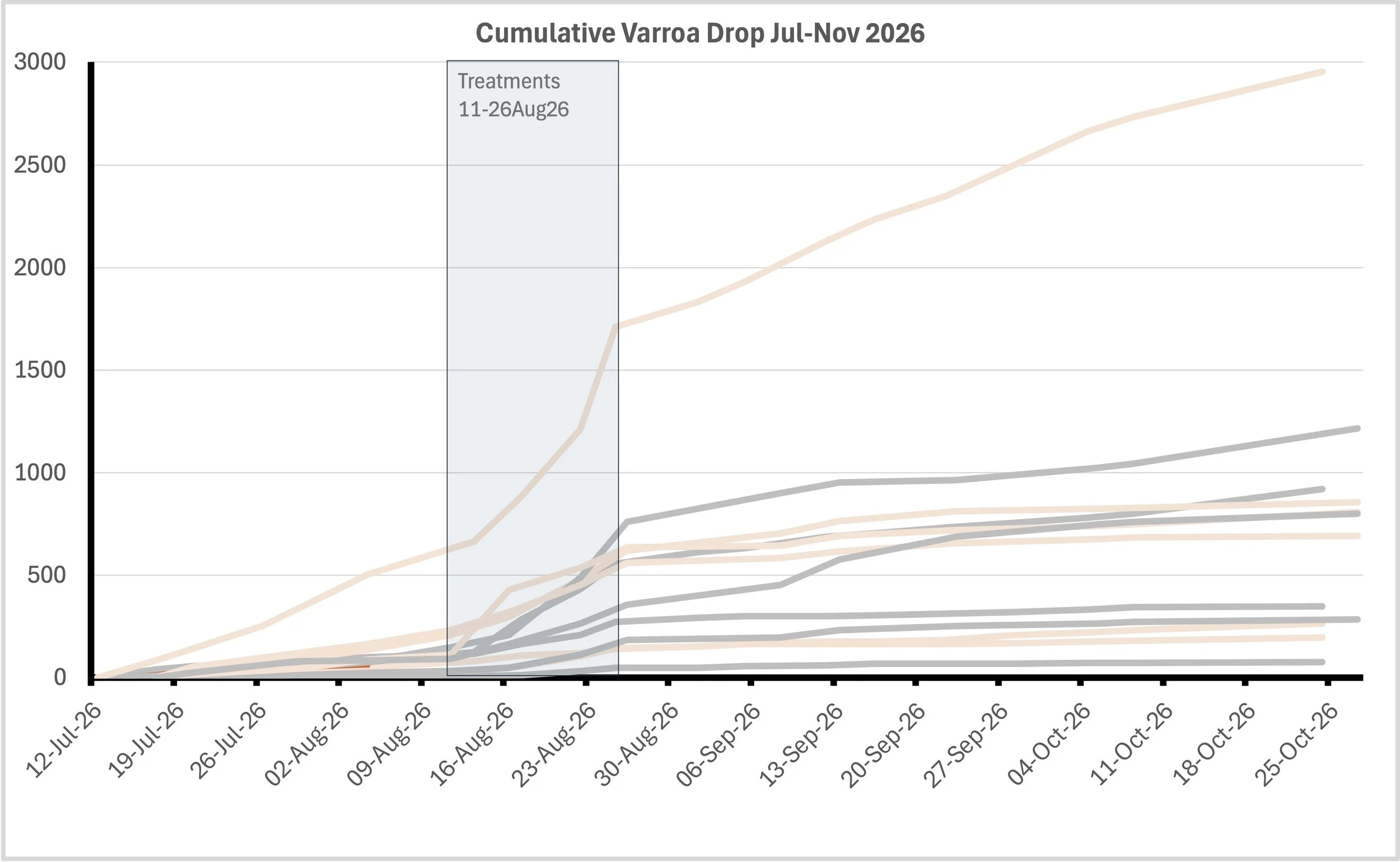
Hives with consistently low mite drop rates, evidence of chewed out pupae and low cumulative mite totals are candidates for our queen breeding program.
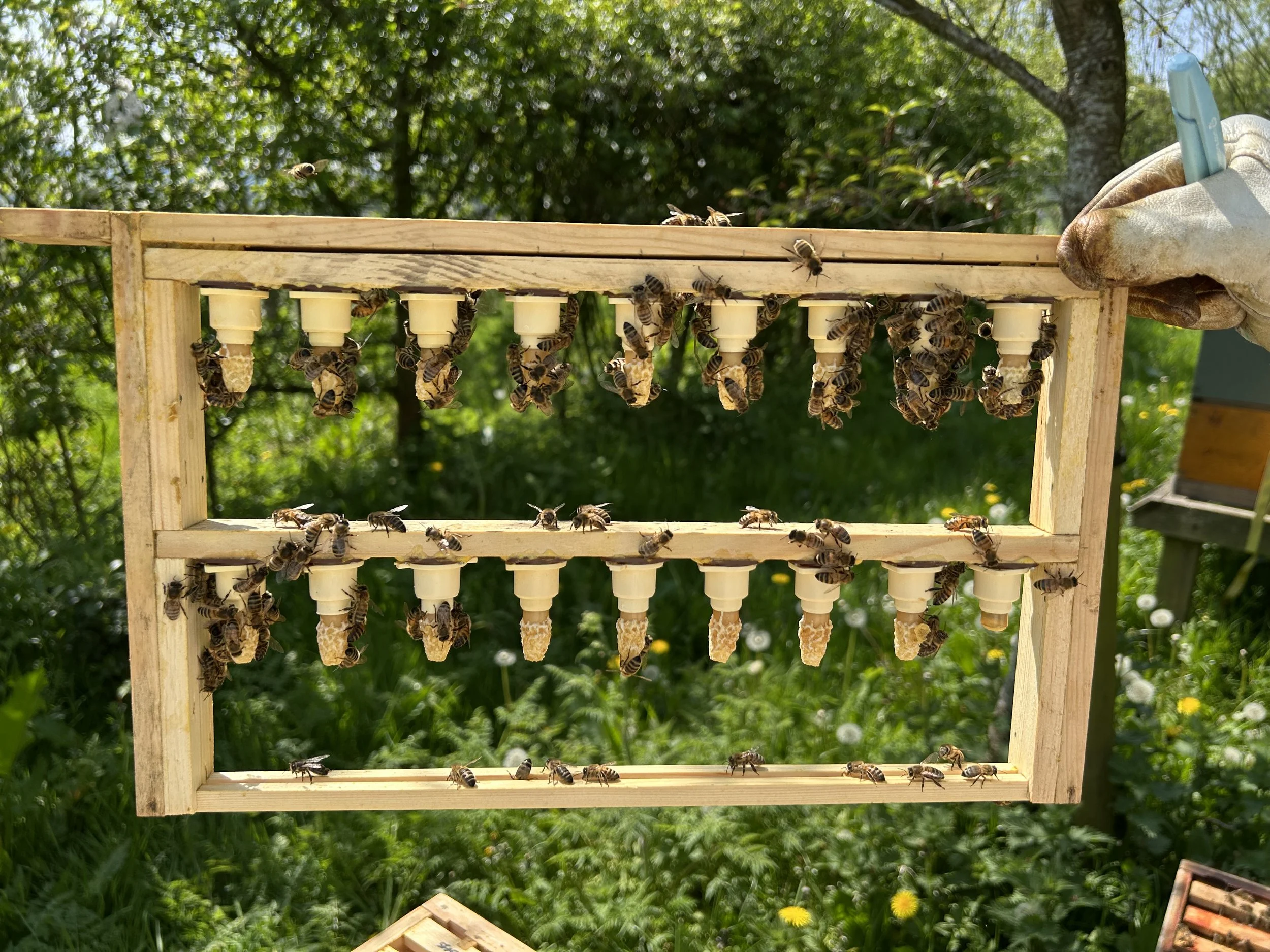
Experience to date suggests that up to 80% of the daughters of our best queens have inherited at least some varroa resistance characteristics from their mothers.
An open source review that covers many of the principals that we follow in breeding varroa resistance is available: https://doi.org/10.1016/j.pt.2026.05.015
Every week, we check all the hives at our breeding apiaries to count the number of fallen varroa mites and monitor for evidence of uncapping behaviours associated with varroa resistance.